


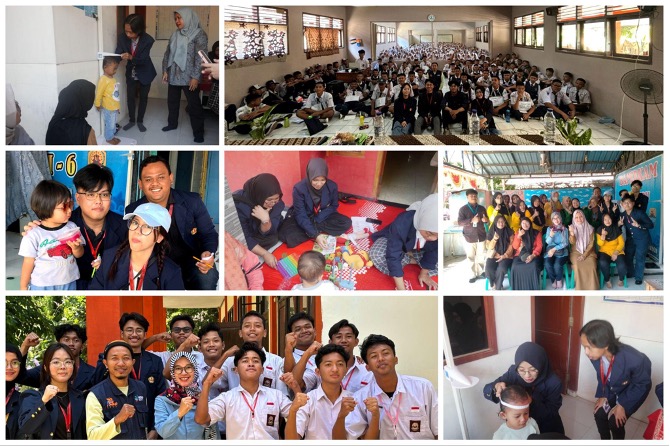
The Faculty of Medicine at Universitas Padjadjaran recently conducted a comprehensive community service program titled “Enhancing High School Students’ Awareness of the Importance of Thalassemia Screening to Break the Chain of Thalassemia in Society.” This program, held from July 2, 2024, to August 3, 2024, took place in Waled, Waled District, Cirebon, West Java, and aimed to educate high school students about the significance of early screening for thalassemia.
The program was designed to provide students with critical knowledge about thalassemia, a genetic blood disorder that affects the body’s ability to produce hemoglobin. Early screening is essential to prevent the hereditary transmission of the disease. Through interactive workshops and informative sessions, students were made aware of the importance of being screened for the disorder before entering adulthood, potentially reducing the incidence of thalassemia in the future.
This initiative was guided by a team of dedicated lecturers from the Faculty of Medicine, including Prof. Ramdan Panigoro, dr., MSc., PhD (the program chair), alongside Yunia Sribudiani, MSc., PhD, Almira Zada, dr., M.Si.Med., Mas Rizky Anggun A.S., dr., M.Kes., PhD, Dr. Mohammad Ghozali, dr., MSc, Yunisa Pamela, dr., MSc., DIC, PhD, and Dr. Lulu Eva Rakhmilla, dr., M.KM. These experts provided valuable insights and scientific guidance throughout the program, ensuring students received accurate and up-to-date information on the subject.
The outreach effort included a series of school visits, where students were not only educated about thalassemia but also encouraged to take responsibility for their health by participating in free screening programs. Thalassemia is highly prevalent in Indonesia, and raising awareness at a young age is crucial for early detection and prevention. The community engagement project also involved partnerships with local healthcare providers to facilitate future screening opportunities.
This community service program reflects the commitment of Universitas Padjadjaran to public health and its proactive approach to addressing genetic diseases like thalassemia. By reaching out to young individuals, the university is not only educating future generations but also contributing to the broader effort of breaking the chain of thalassemia inheritance in Indonesian society. The program was well-received by both the students and local authorities, who expressed their support for continued educational initiatives in the region.


0 Comments